
Introduction
If you’re wondering whether built-in GPS is a must-have or just another flashy "add-on," here is the short answer: Yes, it's your strongest legal defense.
A recent report shows that over 70% of UK drivers support having dash cams installed in vehicles, while police are receiving record numbers of video submissions to support insurance claims and incident reporting. Video evidence is playing an increasingly important role in insurance claims, road safety, and accident investigations—many now choose GPS-enabled dashcams.
In this guide, you'll learn what a GPS dash cam is, what GPS actually does, the five biggest reasons to choose one, how GPS models compare with standard dash cams, and which GPS-enabled dash cams offer the best value in 2026.
What Is a GPS Dash Cam?
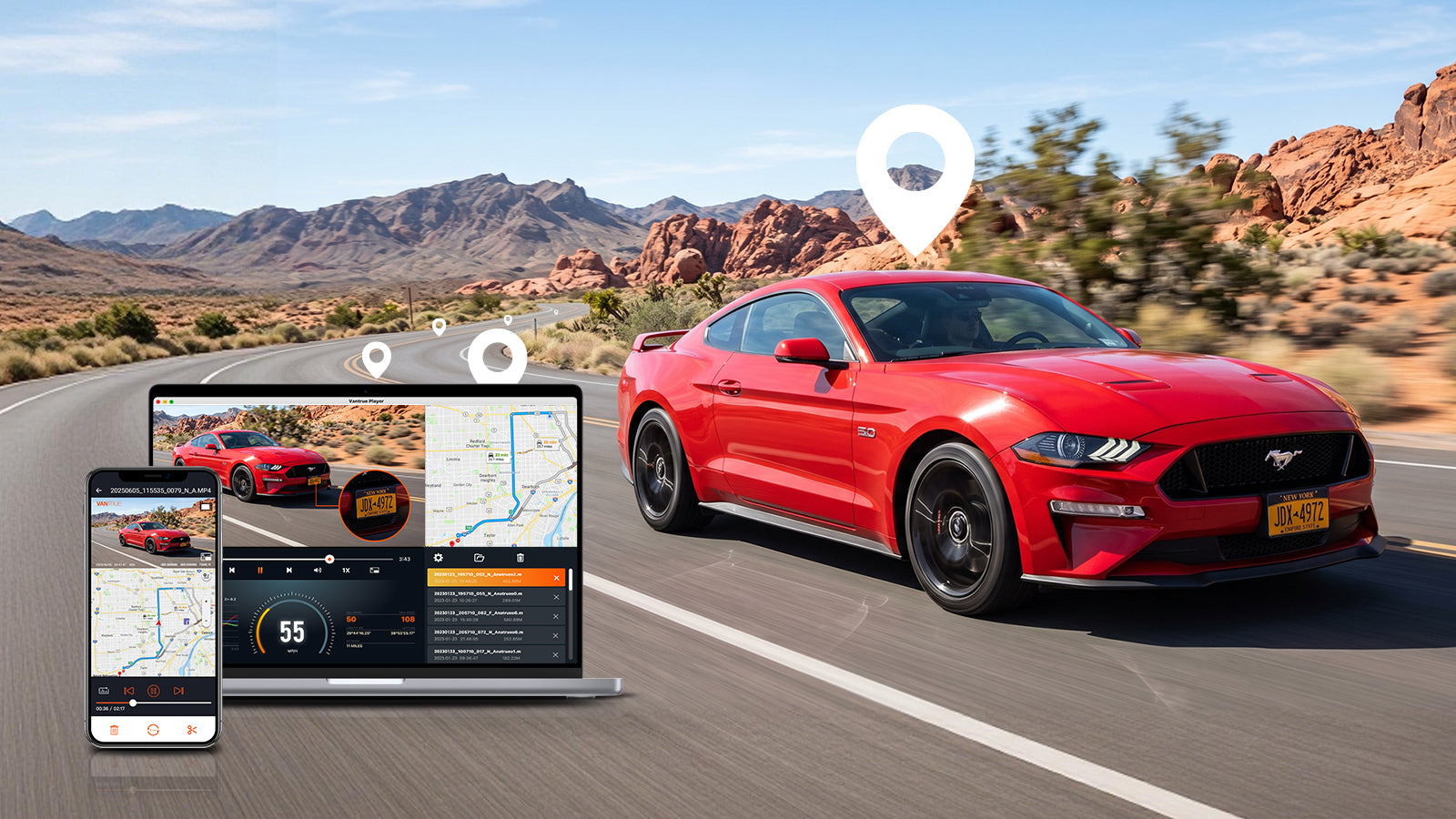
A GPS dash cam is a dashboard camera with a built-in Global Positioning System (GPS) receiver that records more than just video. In addition to capturing footage of the road, it automatically logs your vehicle's location, speed, direction of travel, and the exact time of each recording.
Unlike standard dash cams, a GPS-enabled model embeds this information into the video file or stores it alongside the footage. Many models also let you review your trips on a map through a companion app or desktop software, making it easier to retrace routes and verify where an incident occurred.
It's important to note that built-in GPS does not require cellular service or an internet connection to record location data. The GPS receiver communicates directly with satellites, allowing it to determine your position even in remote areas. Internet access is only needed if you want to upload footage to the cloud or share your recordings online.
For many drivers, GPS transforms a dash cam from a simple recording device into a reliable source of driving data that can support insurance claims, accident investigations, and everyday travel documentation.
5 Reasons You Need a GPS Dash Cam
While every dash cam records video, a GPS dash cam adds valuable driving data that makes your footage more useful in real-world situations. Here are the key functions built-in GPS provides:
1. Records Your Speed
GPS continuously logs your driving speed throughout the journey. This information can help clarify what happened before an accident and may support your version of events during insurance investigations.
In one real road rage case in California, two drivers blamed each other. The footage alone wasn’t clear. But GPS data revealed one driver repeatedly braking and cutting lanes—helping determine fault. If you want to protect yourself financially, GPS is critical.
2. Tracks Your Route
A GPS dash cam continuously records your driving speed and route throughout every journey. Many models also allow you to replay your trip on a map through a companion app, making it easy to review where you've been and when.
This feature is particularly useful for road trips, business travel, deliveries, and anyone who regularly drives long distances.
3. Provides Accurate Time and Location Stamps
Built-in GPS automatically synchronizes the correct time and records the exact location of each video. Accurate timestamps make it easier to organize recordings, locate important footage, and review previous trips without manually sorting files.
Having reliable time and location records can also improve the credibility of your footage when it's shared with insurance companies or law enforcement.
4. Supports Accident Investigations
Beyond accident protection, GPS makes everyday use much more convenient. Depending on the model, you can:
- Replay routes on an interactive map
- Find important recordings faster
- Organize footage by trip
- Keep accurate driving records
- Review previous journeys whenever needed
These features save time and make managing dashcam footage much easier, especially for drivers who spend a lot of time on the road.

5. Better Long-Term Value
GPS-equipped dash cams typically cost slightly more than standard models, but the additional functionality can provide long-term value. Instead of simply recording video, they create a complete driving record that includes speed, location, and route information.
For many drivers, this extra information provides greater confidence on the road and can prove invaluable when dealing with unexpected incidents. If you plan to keep your dash cam for several years, investing in built-in GPS is often well worth the sm all difference in price.
Who should buy a GPS dash cam?
| Is a GPS Dash Cam Right for You? | GPS Dash Cam Recommended? |
|---|---|
| Commute daily | ✅ Yes |
| Drive for Uber or Lyft | ✅ Highly Recommended |
| Own a pickup truck | ✅ Yes |
| Take frequent road trips | ✅ Yes |
| Only drive occasionally | Optional |
Want footage that actually stands up in disputes? Choose a GPS-enabled model.
GPS Dash Cam vs Without GPS
|
Feature |
With GPS Dash Cam |
Without GPS Dash Cam |
Best For |
|
Speed Recording |
Exact speed logged |
Not available |
Insurance claims |
|
Route Tracking |
Full trip playback |
No route history |
Long-distance drivers |
|
Time Accuracy |
Auto-synced |
Can drift over time |
Legal evidence |
|
Evidence Strength |
Strong |
Moderate |
Disputes / court use |
|
Price |
Slightly higher |
More affordable |
Budget users |
|
Power Usage |
Slightly higher |
Lower |
Minimal setups |
If you want a device that’s ready to protect you right out of the box, check out our Best GPS-Integrated Picks for 2026 Below.
The Best Built-in GPS Dash Cams in 2026
|
Model |
Channels |
Max Resolution |
Sensor |
GPS |
Best For |
|
4 (Full coverage) |
Multi-HD / 2.7K+ |
STARVIS 2 |
✅ |
Full protection |
|
|
3 |
4K front |
STARVIS 2 |
✅ |
Rideshare drivers |
|
|
2 |
4K + 4K |
STARVIS 2 |
✅ |
Front + rear coverage |
|
|
1 |
4K |
STARVIS 2 |
✅ |
Minimal setups |
Conclusion
Don’t wait until you’re involved in a "he-said, she-said" dispute to realize the value of location data. A GPS dashcam is absolutely worth it. If your budget allows, starting with a brand like Vantrue—which integrates GPS, Supercapacitors, and the latest Sony sensors—is a smart investment you can make for your vehicle this year.
Share:
Why Road Professionals Need Rechargeable Dash Cams for All-Day Protection