
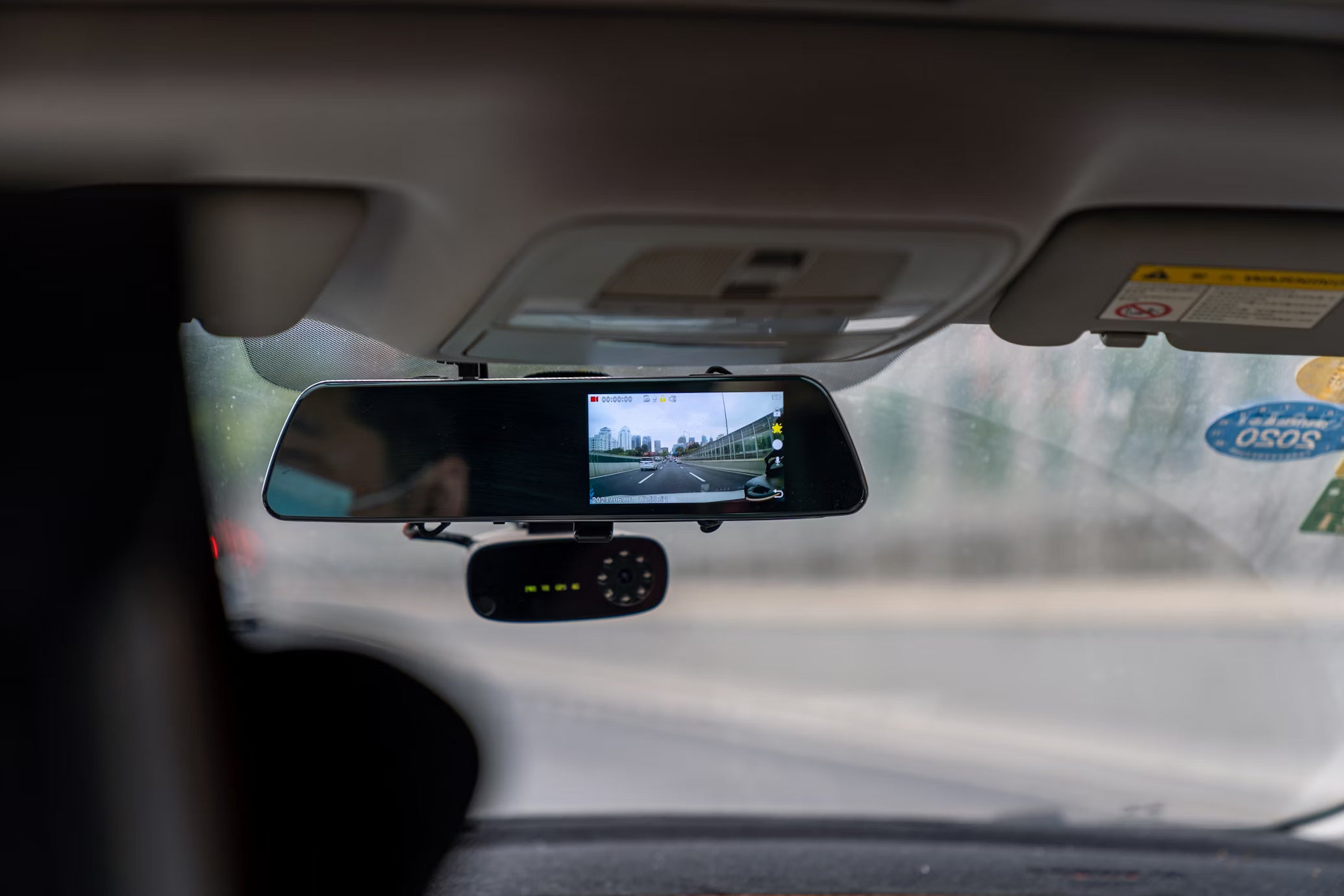
Dash cams have become a must-have for driver safety, with 39% of dash cam owners claiming they bought one after an accident or close call. These devices are easy to install, use, and leverage for legal issues and insurance claims . However, there are questions surrounding the legality of these devices across states.
If you’re considering buying a dash cam, here are ten legal questions you should know and answer. Please note that this article should not constitute legal advice, and you would still need to consult specific laws in your area and maybe even a legal professional, depending on the scenario.

Are Dash Cameras Legal?
Generally, dash cameras are legal in the United States. State laws vary, but they may also impose restrictions regarding where you can place a dash cam and whether sharing footage online violates privacy laws.
Most states require devices to occupy a space limited to 5 square inches, sometimes 7 square inches (if mounted on the windshield). In many states, devices must be installed in the upper center of the windshield, behind the rearview mirror. The dash cam shouldn’t obstruct the driver’s view of the road. While the name still includes the word "dashboard," this should be considered a misnomer, as not every state allows placement on the dashboard.
Do Dash Cams Record Audio, and Is It Legal?
Yes, most dash cams record audio , though laws regarding sharing and distributing these files vary depending on where you live. Audio recordings help document road accidents and conditions, provided you obtained them legally.
For example, if you live in a one-party consent state, only one party needs to consent to the recording. However, in two-party consent states, such as Florida, Maryland, Nevada, Michigan, California, and Pennsylvania, all parties must provide consent. You would have a legal obligation to shut off audio recording on your device.
Recording audio illegally can result in potential legal issues, such as fines or even lawsuits. You can avoid legal consequences by obtaining consent or displaying a visible sign in your vehicle to indicate that you are recording audio.
Editing Dash Cam Footage: What’s Allowed and What’s Not?

Editing dash cam footage is permissible for personal use or if you’re enhancing clarity for personal review. However, altering footage to mislead others can lead to severe consequences, including charges for tampering with evidence.
But what falls under acceptable editing practices? Legal edits include:
- Providing context through text, timestamps, and personal commentary
- Enhancing video quality by adjusting brightness, contrast, and sharpness
- Removing unnecessary segments of the footage to create focus
- Censoring or blurring the faces of individuals and license plates
Prohibited editing practices include:
- Altering timestamps and metadata
- Manipulating audio to misrepresent what was said or heard during the incident
- Adding or removing objects to manipulate the scene
Can Dash Cam Footage Be Used in Court or Insurance Claims?
Yes, you can use dash cam footage in court or insurance claims if you have it properly authenticated. The footage must be recorded in a public place and relevant to the case to be usable.
However, the quality of your video can affect its value to your argument when negotiating coverage with your insurance company. For example, low-quality and grainy videos that don’t provide a clear picture of the scene may not suffice or be useful in court.
The most helpful footage should be clear and include data such as the date and time. Some more advanced dash cams can provide information like GPS coordinates and even driving speed.
Who Owns Dash Cam Footage, and What About the Privacy of Others?
Dash cam footage typically belongs to the person who installed the dash cam and operates the vehicle. Owners also include the lessee, with no federal laws specifically limiting ownership rights in dash cam videos.
If you own the dashcam and receive a subpoena, you must provide the unedited footage to the appropriate governing bodies.
However, privacy considerations are highly nuanced. For example, footage recorded on private property, such as in a gated neighborhood or someone’s driveway, may not be admissible in court.
On the other hand, individuals appearing in dash cam footage (such as other drivers or pedestrians) don’t have ownership claims over the footage. Still, they have privacy rights. For instance, if you publicly share footage of a sensitive incident, you can potentially receive a charge of “public/unwarranted disclosure of private facts.”
Best Practices for Legal Dash Cam Use
Dash cams can be extremely valuable in cases where you must prove fault or make an insurance claim. However, the value of your claim is only as good as your footage. Some key strategies to consider include:
- Staying informed on legal changes: Laws and regulations regarding dash cams often change. Always review legal requirements in your state, especially regarding installation, privacy, and consent.
- Ensure proper installation: Dash cams should be safely installed behind the rearview mirror and not on a tinted area. Ensure it isn’t obstructing your view while driving, and clean your windshield regularly to prevent slipping.
- Respect privacy when sharing clips: If you’re posting a video publicly, blur faces, license plates, and anything displaying sensitive information. It’s best to avoid publicly sharing private conversations or footage of private property.
Frequently Asked Legal Questions
Are dash cams legal everywhere?
Dash cams are legal in all 50 states in the US. There may be specific regulations in your area.
Can edited footage be used in court?
Edited footage can be used in court, given that it is authentic, accurate, and doesn’t misrepresent the incident. Note that, in many states, editing footage is considered evidence tampering, which can lead to potential criminal charges.
What happens if I delete or alter footage?
Deleting or altering dash cam footage can lead to legal penalties and evidence becoming inadmissible in court, especially when you remove clips relevant to the incident.
What are the audio recording laws in my state?
State-level wiretapping laws determine audio recording laws. Some states may only require one-party consent, whereas others will require all-party consent. It’s best to research laws specific to your state.
What is dash cam loop recording?
Dash cam loop recording splits footage into short, sequential video files, typically 1 to 5 minutes long. The device will automatically delete the oldest files when the memory is full.
Conclusion
Dash cams have become a staple solution in increasing road safety, providing accountability for drivers, and offering peace of mind. By understanding the legalities regarding the use of footage, you can maximize its value and protect your passengers.
If you’re looking for a reliable dash cam to protect your drive, Vantrue offers some of the best in the industry!
Deel:
Waarom het tijd is om uw dashcam te upgraden: Maak kennis met de gloednieuwe Vantrue N4S
N5-recensies: Wat vinden mensen van deze dashcam in 2025?