
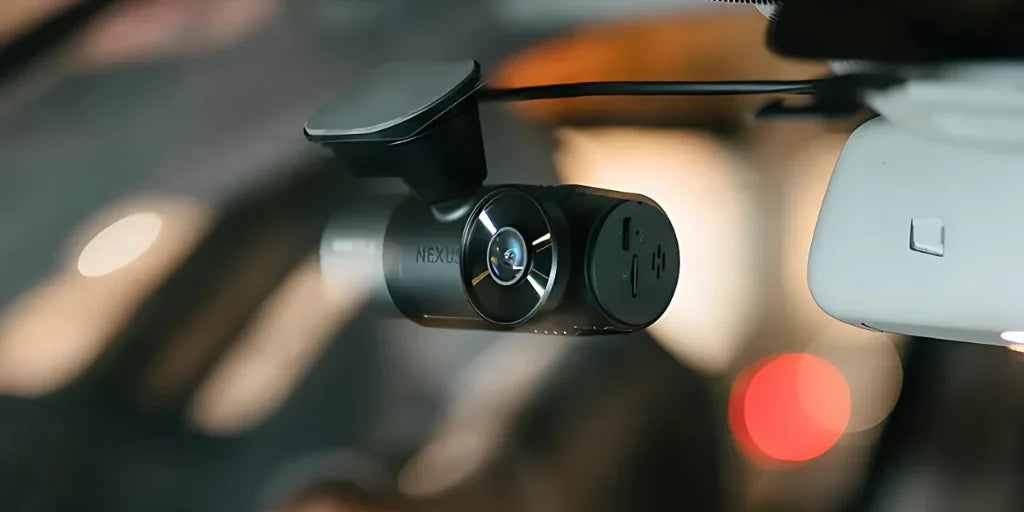
A battery-powered dash cam can record without being plugged into your car at every moment, but that does not mean every dash cam runs all day on a small built-in battery. Many dash cams use vehicle power for daily driving and a hardwire kit or external battery for parking mode.
That matters because drivers want reliable footage without creating new battery problems. A Governing report noted that U.S. road deaths declined in 2025, but more than 36,600 people still died on U.S. roads. A dependable dash cam setup can help preserve important video when incidents happen.
What is a battery-powered dash cam ?
A battery-powered dash cam is a dash camera that can operate from a built-in rechargeable battery or a separate battery source instead of depending only on the vehicle’s outlet. This type of setup can be useful if you want easier installation, temporary recording, or the flexibility to move the camera between vehicles.
However, “battery powered” does not always mean fully wire-free for long periods. Recording video takes power, especially when the dash cam uses higher resolution, Wi-Fi, GPS, parking mode, or a screen. Heat and cold can also affect battery performance.
For a deeper look at wireless-style setups, see Vantrue’s battery dash cam guide .

Are Dashcams Battery-Powered or Connected to the Car?
The simple answer is: some are, but many are designed to use the car’s power for regular recording. A dash cam may get power from a built-in battery, a 12V vehicle outlet, USB, a hardwire connection, or an external dash cam battery pack.
The easiest way to think about it is this: battery power is convenient, while vehicle power is more consistent. A built-in battery may work well for short use, setup flexibility, or emergency backup. But if you want the dash cam to record every commute or monitor your parked car overnight, a more stable power source is usually better.
For example, a quick grocery stop may not require much power. Overnight parking protection is a different situation and may call for hardwiring or an external battery pack.
Pros and Cons
This can be a good option for drivers who want convenience first. It is easier to install, easier to move between vehicles, and helpful for renters, shared cars, road trips, or drivers who do not want visible wiring.
It may also provide short-term recording when the engine is off, depending on the battery size and settings. That can be helpful if you only need brief parked-car coverage.
There are limits, though. Built-in dash cam batteries often have shorter runtimes than hardwired setups. Parking mode can use power quickly, especially if motion detection, impact detection, Wi-Fi, or high-resolution recording is active. Drivers also need to remember charging, battery health, and temperature conditions.
Battery-powered options are useful, but they work best when expectations are realistic.
Dash Cam Power Options Compared
Different power setups solve different problems. Here is a simple comparison:
|
Power option |
Best for |
Main tradeoff |
|
Built-in battery |
Portability and short-term use |
Limited runtime |
|
12V vehicle outlet |
Simple daily driving power |
Cable may be visible |
|
USB power |
Convenient supported setups |
Depends on the vehicle or adapter |
|
Hardwire kit |
Parking mode and clean installation |
More installation effort |
|
External battery pack |
Parked recording with less reliance on car battery |
Extra accessory to charge or install |
|
Cellular/LTE-supported setup |
Remote alerts or access, where supported |
Needs power and service plan |
The best choice depends on how you drive and park. If you only want footage while driving, a simple plug-in setup may be enough. If you want parking mode, a hardwire kit, or an external battery pack may be more dependable. If you want remote access, you need to think about both connectivity and power.
Will a Dash Cam Drain Your Car Battery?
A dash cam can drain your car battery if it keeps recording while the engine is off and does not have proper power management. The risk depends on the condition of your car battery, the dash cam’s power use, parking mode settings, recording time, temperature, and installation method.
Low-voltage cutoff protection can help by shutting the dash cam down before the car battery drops too low. This is especially important for drivers who use parking mode overnight or for long work shifts.
An external battery pack can also reduce reliance on the vehicle battery. Instead of pulling power directly from the car for extended parked recording, the dash cam can use a separate power source. That can make parking protection easier to manage.
When Do You Need a Car Camera Hardwire Kit ?
A car camera hardwire kit connects the dash cam to the vehicle’s fuse box. This gives the camera a cleaner, more permanent power setup than a cable running from the 12V outlet.
A hardwire kit is worth considering if you want parking mode, automatic startup, fewer visible cables, or a setup that does not need to be plugged in every time you drive. It can also help the dash cam switch between driving mode and parking mode more smoothly, depending on the camera and kit.
Installation matters. Incorrect wiring may cause unreliable recording or battery issues. Drivers who are not comfortable working near the fuse box should consider professional installation. A good hard-wired setup should support convenience without creating avoidable electrical problems.
What About a Dash Cam With Cell Service?
A dash cam with cell service can support connected features such as remote alerts, live viewing, location access, cloud-related functions, or parked-vehicle monitoring, depending on the dash cam, LTE module, app support, and service plan.
Cellular features are useful for drivers who want to check on their vehicle when they are not nearby. This can be helpful for street parking, shared parking lots, rideshare driving, or family vehicles.
But cell service does not replace power. A connected dash cam still needs a reliable energy source. If you want remote parking alerts while the vehicle is off, you should plan for both connectivity and power management.

Which Dash Cam Power Setup Is Best for You?
The right setup depends on your driving habits.
Casual drivers may be comfortable with built-in battery support or a simple plug-in power cable. Daily commuters often benefit from consistent vehicle power because the dash cam turns on when the car starts.
Drivers who park outside overnight should consider a hardwire kit with low-voltage protection or an external battery pack. These setups are usually more practical for parking mode than relying only on a small internal battery.
Rideshare and delivery drivers may want stable power, high-capacity storage, and dependable front or cabin coverage. Drivers who want remote access should consider cellular-compatible features along with a power setup that can support parked monitoring.
Vantrue dash cam options are designed for different driving needs, so the best choice starts with how long you need recording and where your car spends the most time.
FAQs About Battery-Powered Dash Cam s
Do they need to stay plugged in?
Some dash cams have built-in batteries, but many need vehicle power for regular use. A built-in battery is usually better for short-term recording or backup than all-day operation.
How long can a b attery-powered dash ca m record?
Runtime depends on battery capacity, video resolution, settings, temperature, and active features. Parking mode, Wi-Fi, GPS, and screen use can shorten battery life.
Can I leave a dash cam recording while my car is off?
Yes, but the setup matters. For longer parked recording, a hardwire kit with low-voltage protection or an external battery pack is usually safer than relying only on a built-in battery.
Is a hardwire kit better than a built-in battery?
It depends on your goal. A built-in battery is convenient. A hardwire kit is usually better for parking mode, automatic startup, and cleaner daily use.
Will parking mode drain my car battery?
It can if power management is poor or the car battery is weak. Low-voltage cutoff protection and external battery packs can help reduce that risk.
Do cellular dash cams still need a power source?
Yes. Cellular features may support remote access, but the dash cam still needs power from the vehicle, a hardwire setup, or another battery source.
Conclusion: Choose the Right Dash Cam Power Setup
A battery-powered dash cam can be convenient, especially for short-term use, portability, or simple installation. But if you want dependable daily recording, overnight parking mode, or remote monitoring, power planning becomes just as important as video quality.
Built-in batteries are useful, but hardwiring and external battery packs can offer more consistent support for parked-car protection. Cellular features can add convenience, but they still need a reliable power source.
To choose confidently, match your dash cam setup to your real driving habits. Explore Vantrue dash cam options and guides to find a setup that fits how, where, and when you drive.
Deel:
Waarom digital nomads een dashcam nodig hebben voor veilige langeafstandsreizen