
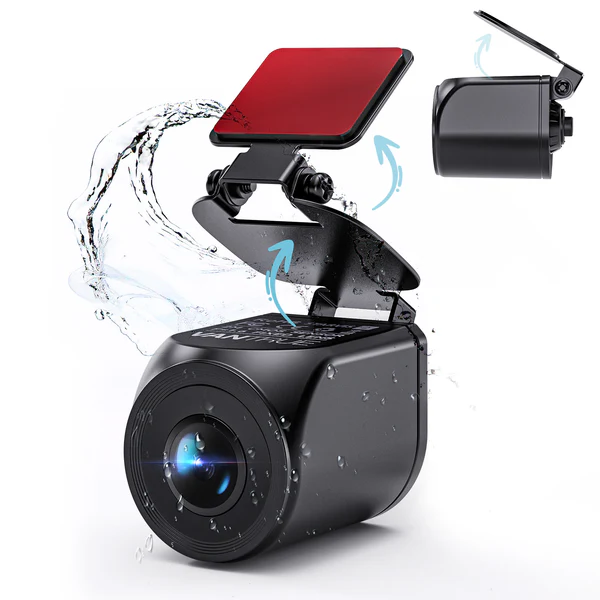
A rear dash cam is a portable and compact camera placed at the back of your car. It is designed to record footage from the rear while driving or backing up. More than just a recording device, it provides real-time video that helps prevent accidents and protect pedestrians—especially children in driveways and parking lots.

Studies show that rear dash cams can significantly improve driving awareness and safety. When paired with a front camera, they provide complete video coverage that you will need in case of accidents. It is also prudent to have it for your insurance claims.
But before you get one, here are the 10 frequently asked questions about rear dash cams:
1. What Is a Rear Dash Cam and How Does It Work?
A rear dash cam is a camera you put on your car's rear bumper or windshield. Its purpose is to record events behind your vehicle, especially when reversing. An essential feature of this device is that it can record in a loop, making coverage last longer.
It often comes with a parking mode. This feature turns on when the camera senses movement, even when your car is not running or is left in the parking lot. These cameras have wide-angle lenses to cover blind spots. They also feature sensors and infrared night vision.
2. Is a Front or Rear Dash Cam More Important?
Both are essential. Front dash cams store footage of front-end collisions, traffic violations, and unexpected road hazards. In contrast, the rear captures various impacts from behind and other parking lot bumps.
However, a front and rear dash cam with night vision is even better. It offers full video coverage 24/7. This device comes in handy when you encounter road disputes, accidents, or if you want to submit proof of impact to your insurance provider.
3. Do I Need a Rear Dash Cam?
Yes, especially if you're constantly anxious about rear-end incidents or spotting unexplained bumps and dents in your vehicle. Indeed, this device removes a lot of weight from your shoulder, and it contributes to your peace of mind.
For many drivers, the added layer of accountability is well worth the investment. The device provides protection and crucial footage for insurance claims. Moreover, they can prevent aggressive drivers and even stop wanton acts of vandalism by acting as a visible security measure.
4. Can this Device Record at Night?
Yes. Don’t buy one if it doesn’t come with this feature. With night recording, your dash cam is armed with infrared LEDs and low-light sensors to capture clear video even in pitch-black places. The cam is handy when reading license plates, detecting suspicious activities, and documenting crashes in the dark.
5. How Difficult Is the Installation?
Setup depends on the brand and model. You should remember that installing a wired rear dash cam may require a meticulous cable installation throughout your vehicle. Wireless models are simpler to set up, but the drawback is that their power supply is not guaranteed to run all the time.
Unless you’re good with tech, you should seek professional help during dash cam installation. This way, the camera lines up correctly, its power is steady, and the parking mode works automatically.
6. What Features Should I Look for?
When choosing a rear dash cam, ensure it captures in high-quality video (1080p or higher). Purchase a model with loop recording and emergency detection. Dash cams are useless when they can’t save clips of sudden movements or crashes.
If you want all-around protection, consider getting a front and rear dash cam with night vision, parking mode, motion sensing, and cloud storage.
7. Does Having a Rear Camera Affect Insurance?
Though insurance companies in the U.S. do not guarantee premium discounts for dash cams, having one can make the claims process much easier. Video proof helps settle arguments and closes cases.
8. Can I See the Footage in Real-Time?

Many new dash cams feature a display of both front and rear views. Some models enable you to switch your view of your front and rear, so you can easily monitor what's behind you while backing up.
Real-time viewing has made rear parking more manageable. It can help you see blind spots or monitor tailgaters. In addition, consider purchasing models with built-in displays or smartphone connectivity.
9. Do Rear Dash Cams Record When the Vehicle Is Parked?
The parking mode feature keeps the camera active even when the vehicle is turned off. When activated, the devices enable you to catch footage of hit-and-run incidents, vandalism, or theft attempts.
Some dash cams use internal batteries, while others are connected to the car's power supply. You need this feature if you park your vehicle in public or high-risk areas.
10. Can it Help Prevent Tailgating?
For sure. A visible rear dash cam for car can influence how drivers behind you behave. A dash cam for car is a great deterrent, as drivers who know they're being recorded tend to be more cautious, possibly preventing road rage and aggressive driving behaviors. Combining it with a front camera significantly enhances safety for everyone on the road.
Conclusion
When installed with a front one, a rear dash cam gives you security—capturing events from both sides and providing clear video evidence. This two-camera setup improve safety, makes insurance claims easier, reduces liability, and might even lower your insurance premiums. To get full coverage around the clock, a system with night vision ensures nothing slips unnoticed. Whether squeezing through tight parking spots or protecting yourself from unexplained damage, equipping your vehicles with cameras on both ends is a wise investment.
Ready to upgrade your driving security? Explore Vantrue's advanced dual dash cam systems featuring crystal-clear night vision, parking mode, and seamless installation. Drive smarter, safer, and with confidence—your vehicle deserves it.
Condividere:
Telecamere da cruscotto impermeabili o action camera: quale mi serve?
Confronto tra le memorie delle dash cam: scheda TF, scheda SD e scheda micro SD.