
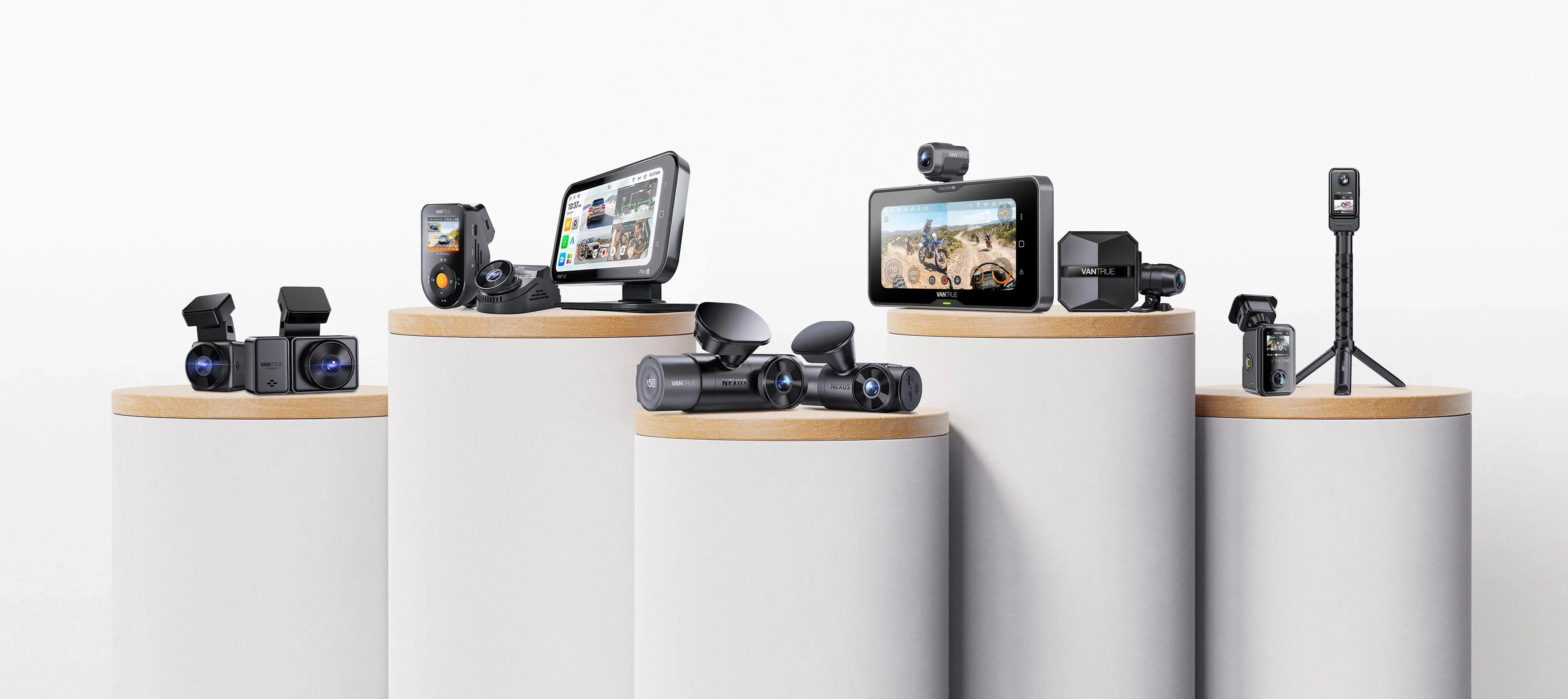
Choosing the best car camera is not about picking the most expensive model or the longest feature list. It is about matching the camera to the way you drive. A daily commuter, rideshare driver, parent, road-tripper, and truck driver may all need different coverage.
A car camera can mean a front-facing dash cam, a rear camera, a cabin camera, a 3-channel system, a 4-channel system, or a parking-focused camera. Understanding the main types of dash cams makes it easier to choose the setup that protects your vehicle, passengers, and peace of mind.

Why Car Cameras Matter as Drivers Focus More on Road Safety
Road safety is improving in some important ways, but crashes still remain a serious concern. According to the International Transport Forum’s Road Safety Annual Report 2025 , U.S. road deaths fell from 40,901 in 2023 to 39,345 in 2024, a 3.8% decrease. Preliminary first-half 2025 data also showed an 8% decline in U.S. road deaths compared with the same period in 2024.
That progress may reflect many safer-driving factors, including better awareness, enforcement, vehicle safety systems, and improved road habits. A dash cam should not be described as the only reason drivers are safer. Instead, it is one practical part of a safety-minded routine. A camera can document crashes, clarify fault, record hit-and-runs, and help drivers review what happened after an incident.
How to Choose the Best Car Camera for Your Needs
The best car camera for one driver may be too limited or too complex for another. Start with coverage. Front-only cameras record the road ahead. Front-and-rear cameras add protection against rear-end crashes and parking-lot disputes. Front-and-inside cameras help rideshare, taxi, delivery, and family drivers record both traffic and cabin activity. A 3-channel or 4-channel setup adds broader vehicle protection.
Next, consider video quality. A strong dashcam buying guide should explain why resolution, HDR, night vision, and lens angle matter. Higher dash cam video resolutions can help with signs, vehicle details, and license plates, especially when paired with HDR and low-light sensors.
Also think about parking mode, GPS, app access, LTE compatibility, and storage. Multi-channel cameras need more storage than a simple front camera, while drivers who park outside may want impact detection, motion detection, or remote monitoring.
Quick Buying Checklist
Ask yourself these questions before choosing the best car dash camera for your vehicle:
- Do you need only the road ahead, or also rear and cabin coverage?
- Do you often drive at night or through changing light?
- Do you park on the street, in public lots, or at work for long periods?
- Do you need GPS, Wi-Fi, app access, LTE, or remote alerts?
- Do you want a discreet camera, wide-angle lenses, or a waterproof rear camera?
Best Car Camera Types by Driver Profile
Daily Commuters and First-Time Dash Cam Users
For daily commuters, a compact front-only camera is often enough. It records traffic, sudden braking, lane incidents, and road conditions without adding a complicated installation. Look for clear front video, HDR, night vision, loop recording, Wi-Fi/app review, GPS, and reliable parking mode. A Vantrue E1 PRO-style or S1 PRO 1CH-style setup can fit drivers who want simple front-facing protection with a cleaner windshield setup.
Families and Highway Drivers
Families and highway drivers often benefit from front-and-rear or 3-channel coverage. Rear video can be valuable after tailgating, lane-change disputes, parking-lot bumps, and rear-end collisions. If you regularly travel with children or passengers, a cabin-facing camera may also help capture interior context. Vantrue S1 PRO or S1 PRO MAX-style dual-channel setups fit drivers who want front and rear protection, while N4 PRO or N4 PRO S-style systems add cabin coverage.

Uber, Lyft, Taxi, and Delivery Drivers
A rideshare driver usually needs road and cabin evidence. An uber dash cam front and inside setup can help document passenger disputes, vehicle damage, unsafe behavior, and incidents that happen inside the vehicle. Important features include infrared cabin recording, a wide interior lens, audio controls, night vision, front HDR, app access, and parking mode. A Vantrue N2X-style front-and-inside setup can work well for rideshare basics, while N4 PRO S or N5S-style coverage may suit drivers who also want rear or wider vehicle protection. For more detail, see Vantrue’s rideshare dash cam and Uber dash cam guides.
Drivers Who Want Full-Vehicle Coverage
Some drivers want more than front and rear recording. A 3-channel dash cam can record the road ahead, cabin, and rear view. A 4-channel dash cam can add broader cabin or exterior coverage, depending on the setup. A 360 dash cam or panoramic-style camera can provide wider context around the vehicle. Vantrue N4 PRO S, N5S, and E360-style systems fit drivers who want fewer blind spots and more complete incident documentation.
Parked Cars, Street Parking, and Hit-and-Run Concerns
If parking damage is your biggest worry, prioritize parking mode . Look for impact detection, motion detection, buffered or pre-recording, low-frame-rate recording, low-light parking video, and sufficient storage. Drivers who park on busy streets, in apartment lots, or away from home may also benefit from LTE dash cam features , where supported, for remote access or alerts.
Truck, Outdoor, and Rugged-Use Drivers
Truckers, outdoor drivers, and people using exterior rear cameras should think about durability. A rugged setup may need dust and water resistance, secure mounting, GPS, wide-angle coverage, and stable long-duration recording. Vantrue F1-style waterproof/rugged systems or models with waterproof rear-camera options can suit drivers who face rougher conditions. See Vantrue’s guide to dash cams for truckers for more use-case guidance.
Matching Features to Real-World Driving Problems
The right feature depends on the problem you want to solve. For license plate detail, prioritize higher resolution, HDR, proper mounting angle, a clean windshield, and PlatePix-style license plate priority where available. For night driving, choose strong night vision dash cam performance, HDR, and infrared cabin recording if you need interior video.
For insurance evidence, front/rear coverage, GPS data, stable timestamps, loop recording, and protected event files can all help preserve useful context. For passenger safety, choose cabin-facing or multi-channel recording with clear interior video and audio settings. For parked-car damage, focus on impact detection, motion detection, pre-recording, and LTE or remote monitoring if you want access away from the vehicle.
FAQ
What is the best car dashboard camera for most drivers?
The answer to what is the best car dashboard camera depends on your driving habits. Most everyday drivers should start with a front-and-rear dash cam because it records both forward traffic and rear incidents.
Is a front-only car camera enough?
Yes, for many commuters. A front-only camera is simple, discreet, and useful for recording the road ahead. Drivers who want more evidence should consider rear or cabin coverage.
Do rideshare drivers need a cabin-facing camera?
Usually, yes. Cabin video can help document passenger behavior, disputes, damage, and safety concerns during rideshare, taxi, or delivery work.
Is 4K worth it for a dash cam?
4K can be worth it if you want sharper road details, signs, and vehicle information. It works best with good HDR, lens quality, and low-light performance.
What features matter most for parking protection?
Look for impact detection, motion detection, buffered recording, low-frame-rate parking mode, night recording, large storage support, and optional LTE features where available.
Is a 3-channel or 4-channel camera better?
A 3-channel camera is ideal for front, cabin, and rear coverage. A 4-channel camera is better for drivers who want broader interior or vehicle-area coverage.
Conclusion: Choose the Best Car Camera for the Way You Actually Drive
The best car camera is the one that fits your real driving risks. Commuters may only need a compact front camera. Families and highway drivers may prefer front-and-rear protection. Rideshare drivers often need cabin recording. Street parkers should prioritize parking mode, and drivers who want fewer blind spots should consider 3-channel, 4-channel, or 360-style coverage.
Recent road-safety trends are encouraging, but responsible drivers still benefit from clear documentation and better awareness. Compare Vantrue’s best dash cams to choose the setup that matches your vehicle, passengers, and daily routine.
Teilen:
How to Pick the Best Mini Dash Cam
How to Choose the Best Wireless Dash Cam in 2026: 3 Things You Need to Know